Hallandale Beach, FL · Garage Door Service
What an Older Garage Door Is Worth Fixing in Hallandale Beach
Most Hallandale Beach garage doors date to the 1960s-70s building boom. Here's how to tell if yours is worth repairing or ready to replace.
- Repairs & new doors
- Springs & openers
- Serving 7 nearby communities
What Is Going On
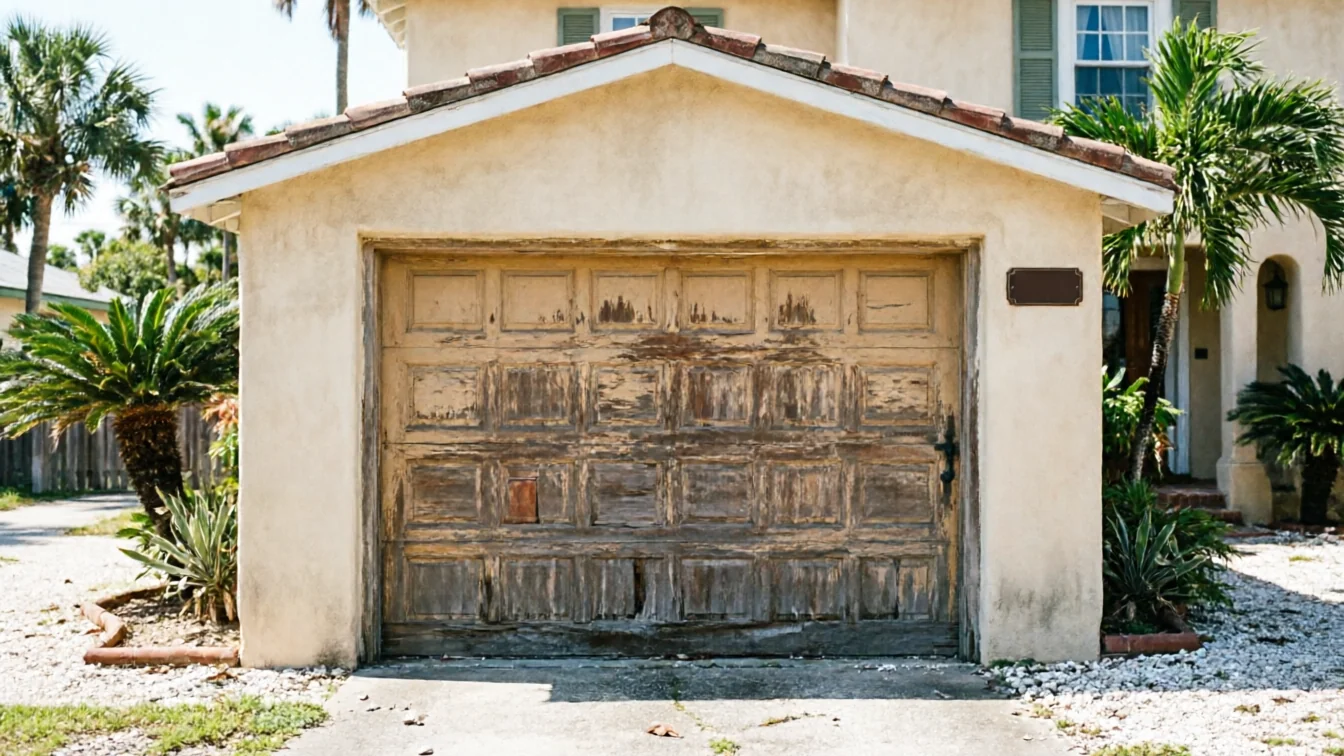
A lot of the housing stock in and around Hallandale Beach went up between 1953 and 1992, with the median build year landing around 1971. That matters because a door installed when a house was built, or replaced once in the decades since, is likely running hardware from a completely different design era than what's sold today. Doors from that stretch were often built heavier, with steel skins over wood frames, and paired with torsion or extension springs sized for weight and balance specs nobody checks anymore unless something breaks. When we get a call on a door from one of the 28 named areas that make up this mostly 1960s-70s stock, the first question isn't "how old is it" - it's "what's actually failed." A cracked bottom panel on a door that's otherwise balanced and quiet is a different job than a door that's racking in the track because the whole frame has shifted with the house. Age alone doesn't condemn a door. What condemns it is when the fix costs more in labor and hard-to-source parts than a new door costs outright, or when one failure is really three failures waiting their turn.
What Local Conditions Do
Hallandale Beach sits in a mild temperate climate band - no hard freezes, no deep winters that crack vinyl or warp wood seasonally. That's the good news for an older door: you're not fighting freeze-thaw cycling that tears apart seals and bends track the way colder markets do. The doors here age more from steady use and steady moderate temperatures than from violent swings. That means a door built in, say, 1975 can still be structurally sound decades later if it was ever reasonably maintained, because the climate hasn't been working against it the way it would somewhere with real winters. What it doesn't protect against is wear on moving parts - rollers, hinges, cables - which fail on schedule regardless of climate, and springs, which fatigue on a cycle count, not a calendar. So the climate here buys you a longer window to decide about an old door's bones. It doesn't buy you a pass on the hardware that opens and closes it every day.
What It Costs
I don't have a price list to hand you here, and I'd rather tell you that than make one up. What I can tell you is what drives the number up or down on an older door. A standard panel swap or spring replacement on hardware that's still a common size is usually the cheaper path. The expensive path shows up when a door from the 1960s-70s building era uses a track width, spring mount, or panel dimension that isn't stocked anymore - at that point you're paying for a custom order or a full replacement, not a quick fix. With median household income in this area sitting under $60,000, most owners want a straight answer on which bucket their door falls into before committing. That's a conversation we have on-site, looking at the actual door, not over the phone with guesses.
Checking It Yourself
Before you call anyone, look at a few things. Pull the release handle, let the door move by hand with the opener disconnected - it should move smoothly and hold roughly where you leave it. If it slams down or won't budge, that's spring tension, not a motor problem. Check the track for daylight gaps between the rollers and the rail; doors from the older part of the stock around Hallandale Beach, West Park, and Pembroke Park often have steel rollers that have worn grooves into the track over the decades, which shows as a visible wobble. Look at the bottom panel for rust blooming from the inside out - common on doors that have sat through enough humid stretches without a repaint. If the door is quiet, level, and just slow to open, that's usually an opener issue, cheap to confirm. If it's loud, uneven, or leaning in the track, that's structural, and it's worth a look before you spend money on the wrong part.
Frequently asked questions
How do I know if my garage door is original to the house?
If your Hallandale Beach home was built in the 1960s or 70s - common for this area given the median build year of 1971 - and the door still has steel rollers, a single torsion spring, and no visible model sticker, it's likely original or close to it. A tech can confirm by checking the track width and spring mount style against current standard sizes.
Does the coastal climate here wear out garage doors faster?
The mild temperate climate in this area is actually easier on garage doors than markets with hard winters - no freeze-thaw cycling to crack seals or warp wood. Wear here comes mostly from steady daily use on moving parts like rollers and cables, which fail on a cycle count regardless of season.
Is it ever worth replacing just one panel on an old door?
Sometimes. If the rest of the door is balanced, quiet, and the track is straight, a single panel swap on a door from the 1960s-70s stock can be the cheaper fix - if that panel size is still available. If it isn't, you're often better off replacing the whole door rather than paying for a custom order.
What's a sign my door isn't worth fixing anymore?
When more than one system is failing at once - say, worn rollers plus a fatigued spring plus a racking track - the labor to fix each piece separately starts to approach what a new door costs. That combination shows up more on doors original to houses built decades ago than on anything newer.
Related garage door services in Hallandale Beach
More garage door guides
Book garage door service in Hallandale Beach
Call now or request a quote - tell us what the door is doing and where you are.