
Hallandale Beach, FL · Garage Door Service
Old Doors, No Insulation: What's Really Going On in Hallandale Beach
Hallandale Beach homes from the 1953-1992 build era often have uninsulated garage doors. Here's what that means for heat, cost, and what to check yourself.
- Repairs & new doors
- Springs & openers
- Serving 7 nearby communities
What Is Going On
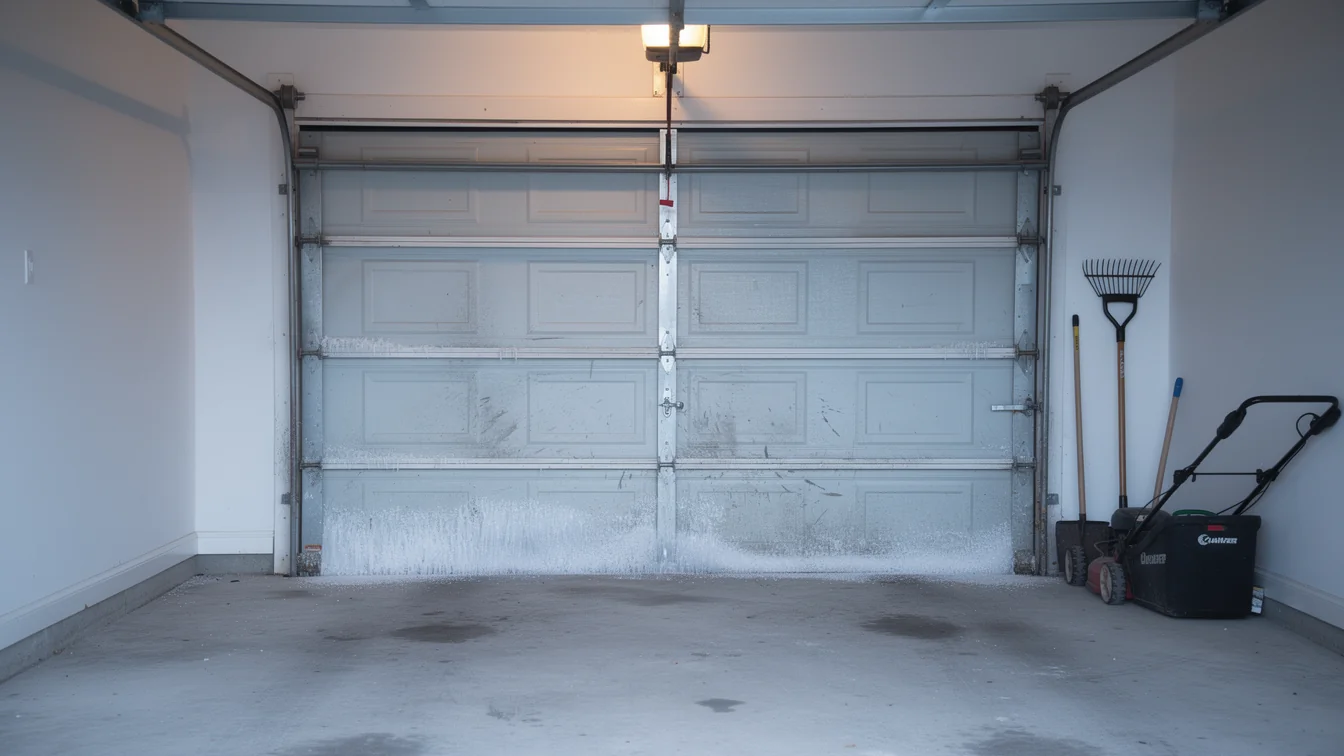
Most of the garage doors we get called out on in Hallandale Beach went up somewhere between 1953 and 1992, with the bulk of that stock dating to the 1960s and 70s. That's the era before insulation requirements got written into residential garage door codes. The panel is a single layer of steel or aluminum, sometimes with wood trim, and nothing behind it. No foam core, no thermal break at the track, no weatherstrip rated for anything beyond keeping rain off the floor.
That matters because a garage door is the single largest moving opening on most of these houses, and on a slab built in that window it's often doing more thermal work than anyone realizes. The door was engineered to open and close for decades, not to hold back heat, and on a house this age it usually still does the first job fine. It's the second job it was never built for.
We see this pattern across the older pockets of the area - it's not one street or one builder, it's the decade. If your house falls in that 1953-1992 window, there's a good chance the door matches the build year even if the house has been updated since.
What Local Conditions Do
Hallandale Beach sits in a mild temperate band, so we don't get the freeze-thaw cycling that cracks panels or seizes hardware the way it does further north. That's the good news for a 1971-vintage door - the steel itself usually holds up.
What doesn't hold up is the seal. An uninsulated single-layer door with original or long-replaced weatherstrip lets humid air move through the garage pretty much all year, since there's no cold season to shut that exchange down. On a house this age, that means the garage runs close to outdoor temperature and humidity nearly year-round, which is harder on anything stored in there - paint, cardboard, electronics, even the opener's circuit board - than people expect from a place with no real winter.
The hardware tells the same story differently. Springs and rollers on a door this old have had decades of mild-climate cycling, which is gentler than a harsh climate but still adds up. We don't see the corrosion failures you'd get near more severe weather, but we do see worn rollers and springs that are simply past their rated cycle count, just failing on their own schedule rather than from weather stress.
What It Costs
I can't give you a number here without a real quote in front of the door - too much depends on whether you're insulating an existing panel, replacing the whole door, or just resealing what's there. What I can tell you is how to think about it for a house in this age bracket.
Adding insulation to an original 1960s-70s single-layer door usually isn't a retrofit job - you're not stuffing foam into a panel that wasn't built to hold it. Most houses from this era end up replacing the door rather than upgrading it in place, because the hardware, track spacing, and panel thickness were never designed around an insulated core.
The household income figure for this area ($59,989 median) tells you this is a real budget decision for most owners, not a casual upgrade - which is exactly why I'd rather look at the actual door than quote blind. A straight reseal and weatherstrip swap on an original door costs a lot less than full replacement, and for a lot of these houses that's the right call if the panel itself is still sound.
Checking It Yourself
Before you call anyone, a few things you can check on a door from this era. Put your hand flat on the inside of the panel on a warm afternoon - if it's noticeably warmer than the air a foot away, you're feeling an uninsulated single layer of steel doing exactly what it was built to do, nothing more.
Look at the bottom seal. On a house built in the 1953-1992 window, that strip has likely been replaced at least once already, maybe several times, since rubber doesn't last 50-70 years. If you can see daylight at the corners when the door's shut, that's your biggest and cheapest fix before you think about anything bigger.
Check the panel for flex - push on it gently at the center of the widest section. A single-layer door from this era will give a little; that's normal for the construction, not a sign of failure. What's not normal is a panel that's visibly bowed or a door that's hard to lift by hand with the opener disconnected. That's spring wear, not insulation, and it's worth having someone look at before the opener motor starts compensating for it.
Frequently asked questions
Is my garage door too old to insulate?
If your house was built in the 1953-1992 range, which covers most of this area, the original door almost certainly can't take a foam retrofit - the panel and hardware weren't designed for the added weight and thickness. Most owners end up replacing rather than retrofitting. We'd need to see the actual door to say for sure.
Does the mild climate here mean I don't need to worry about my door?
The mild temperate band means you're spared the freeze-thaw damage that wrecks doors in harsher climates, so the steel itself tends to last. But heat and humidity still move through an uninsulated single-layer door year-round, and hardware still wears out from cycling, just on its own timeline rather than a weather-driven one.
How do I know if my door matches my house's build year?
If nobody's replaced it, a single steel or aluminum layer with no visible foam core, original-style hinges, and a thin bottom seal usually points to the house's original build era - commonly the 1960s or 70s stock that dominates this area. A quick look at the back of the panel for a foam layer will confirm either way.
Related garage door services in Hallandale Beach
More garage door guides
Book garage door service in Hallandale Beach
Call now or request a quote - tell us what the door is doing and where you are.