Hallandale Beach, FL · Garage Door Service
What a Cold Snap Does to a Garage Door Spring Here
Hallandale Beach homes date mostly to 1953-1992 with a mild climate, so a spring failing on a cold morning is rare but still catches 1960s-70s doors off guard. Here's why.
- Repairs & new doors
- Springs & openers
- Serving 7 nearby communities
What Is Going On
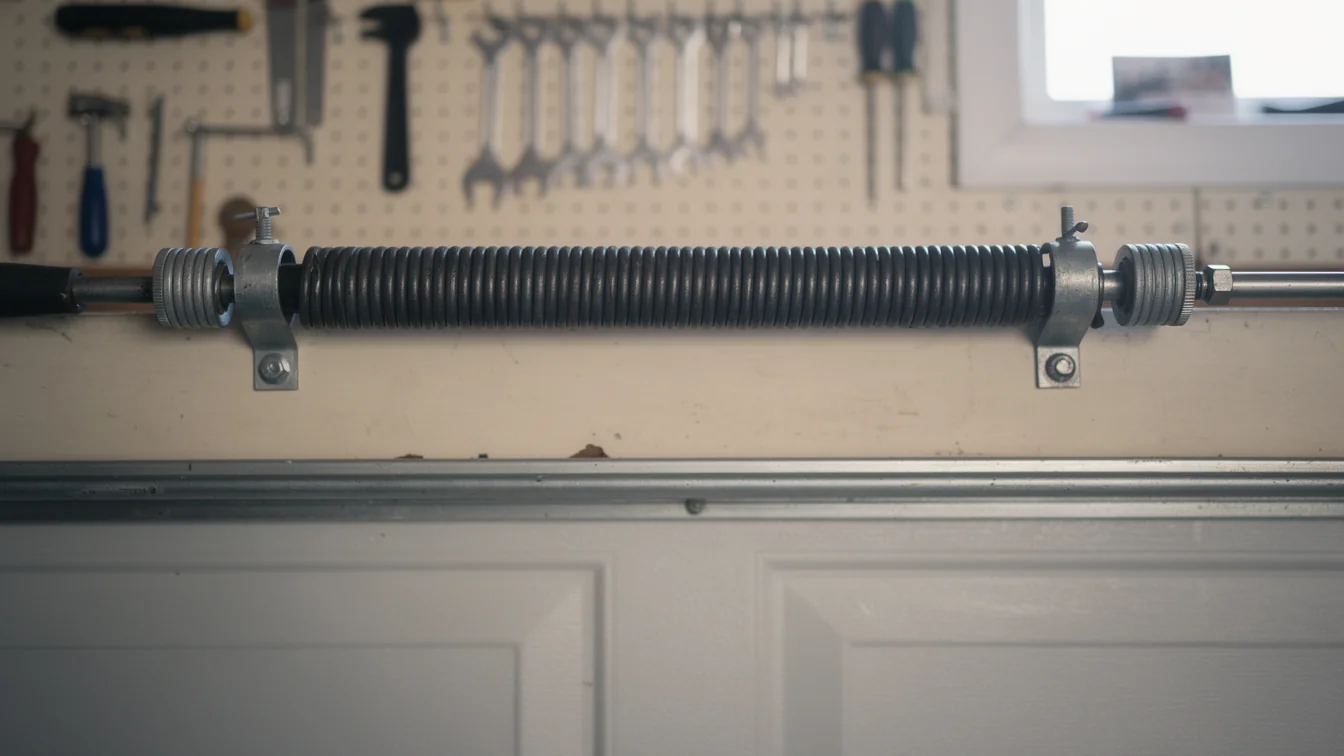
Hallandale Beach doesn't get the hard freezes that snap springs overnight the way they do up north, but the mild temperate climate here still swings enough on a January or February morning to matter. Steel contracts when it cools, even a little, and a torsion spring that's been doing its job since the Carter administration doesn't have much give left in it. A lot of the housing stock in this service area went up between 1953 and 1992, with the median landing around 1971, so a good share of the springs we get called out on are original or close to it. They've been cycling through decades of salt air and humidity before a cool snap ever shows up. The spring doesn't break because of the cold alone - it breaks because the cold is the last straw on metal that was already fatigued. You'll usually hear it: a loud bang from the garage, then the door won't budge or it slams down with no resistance. That's the spring, not the opener, and it's not a DIY fix - torsion springs are under real tension and this is one job where we tell people to call rather than reach for a wrench.
What Local Conditions Do
The 1960s-70s stock that makes up most of the 28 named areas in this service area tends to share the same setup: single torsion spring, steel doors, hardware that was never built with corrosion resistance in mind. Mild temperate conditions mean the metal isn't dealing with freeze-thaw cycling, but it is dealing with constant humidity and salt in the air near the coast, which thins the wire gauge over the years without anyone noticing. Add a cool, dry cold front moving through and that thinned wire is more brittle than it was in August. That's the real mechanism - not ice, just reduced elasticity meeting metal that's already lost strength to corrosion and fatigue. Doors built closer to 1971, the median year for this area, are the ones we see most often when a cold front rolls through and a spring lets go. Newer installs with galvanized or coated springs hold up better against the same weather, which is part of why spring material matters as much as age when we're sizing up a job.
What It Costs
We don't have a flat number to hand you here - torsion spring work depends on door weight, spring size, and whether one spring failed on a double door that really needed two. What we can tell you is that median household income in this service area runs just under $60,000, and most owners we talk to want the honest number before we start, not after. A single spring replacement on an older door is generally the cheaper call; if the opposite spring is the same age, it's often worth doing both at once since cycling further on a weak match tends to throw the whole system off. We'll quote it on-site once we see the door. One limitation worth saying plainly: if your door is original to a house built in the early 1970s and the drums or shafts are rusted through, spring replacement alone won't fix it - at that point you're looking at a hardware job, not just a part swap, and we'll tell you that before taking your money for a spring alone.
Checking It Yourself
You can look without touching anything dangerous. Open the garage and look at the spring above the door - if it's stretched apart with a visible gap in the coil, it's broken, full stop. Don't try to open the door manually when that's the case; a broken spring means the full weight of the door is now on the opener or on you. Check the cables on either side of the door too - fraying near the bottom bracket is common on doors that have been through a few decades of this area's humidity, even without a cold front involved. If the door feels heavier than usual when you lift it by hand with the opener disconnected, that's a sign the spring is weakening but hasn't fully gone yet, which is actually the better time to call. Waiting until it snaps on a cold morning means you lose use of the door entirely, often right when you need to leave for work.
Frequently asked questions
Does cold weather really cause spring failure in Hallandale Beach?
Not the way it does in colder states. Our mild temperate climate doesn't freeze metal, but a cool front can be the final stress on a spring that's already fatigued from age and coastal humidity. It's rarely the sole cause - it's usually the trigger on a spring that was already near the end.
How old are most garage door springs in this area?
A lot of the housing stock here was built between 1953 and 1992, with the median around 1971, so many original springs are 30 to 50 years old. If yours hasn't been replaced since the house was built, it's a strong candidate for failure regardless of weather.
Can I replace just one spring if only one broke?
You can, but on a double door with two springs of matching age, replacing just one often means the older spring fails again soon after under the new imbalance. We'll tell you honestly if your situation calls for one or two when we're on-site.
Is it safe to open the door myself after a spring breaks?
No. Once a spring breaks, the door's full weight shifts onto the opener or onto you if you try to lift it by hand. Leave it closed and call - this isn't a job to work around until it's fixed properly.
Related garage door services in Hallandale Beach
More garage door guides
Book garage door service in Hallandale Beach
Call now or request a quote - tell us what the door is doing and where you are.