Hallandale Beach, FL · Garage Door Service
Garage Door Opener Repair, Hallandale Beach
Opener repair for Hallandale Beach homes built mostly between 1953 and 1992 - worn gears, failing sensors, and capacitors that give out in the heat and salt air.
- Repairs & new doors
- Springs & openers
- Serving 7 nearby communities
Can You Do This Yourself
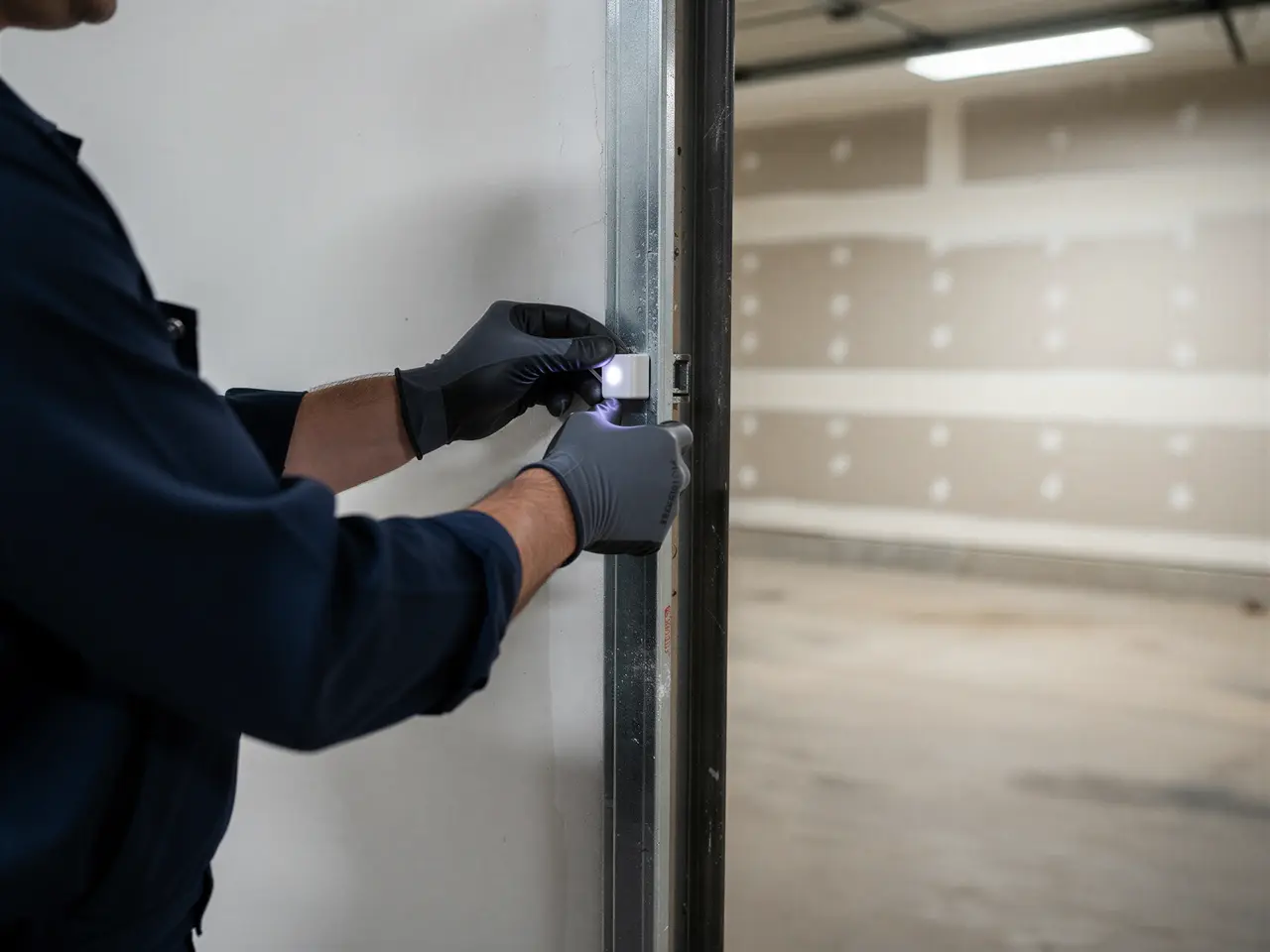
Some of it, yes. If the opener runs but the door won't move, check the manual release cord first - it sometimes gets bumped into the disengaged position by a stored bike or ladder. Dead remote with a light that still works on the wall button usually means a battery or a reset of the remote's code, both of which take five minutes and no tools.
What you shouldn't take apart yourself: the logic board, the drive gear housing, or anything involving the high-voltage side of the motor. Openers installed across this area through the 1970s and 80s used chain and screw drives with steel gears that strip under load rather than failing clean, and once that gear is chewed up, the fix is a new drive assembly, not a tightened screw. If your door reverses before it touches the floor, that's a safety sensor or force-setting issue, and misjudging that setting is how people get hurt or crack a panel. Know the limit: if you've swapped the remote battery, checked the release, and it still won't run, that's a call, not a project.
What Causes It Around Here
Most houses in this service area were built between 1953 and 1992, with the typical home dating to around 1971, and a lot of that 1960s-70s housing stock still runs its original or first-replacement opener hardware. Belt and chain drives from that era used capacitors and start relays that weren't built for forty-plus years of South Florida humidity sitting on them, and that's the single biggest reason openers in these neighborhoods die slow rather than sudden - a motor that hums but won't lift, a unit that works in the morning and quits by afternoon.
The mild, humid climate here adds a second failure path: moisture gets into the logic board's relay contacts and corrodes them, so the opener's radio receiver drops out even though the motor itself is fine. That shows up as a remote that used to work from the driveway and now only works standing under the unit, or not at all. Garages that sit closed and unventilated for days trap that humidity, which speeds the corrosion up rather than slowing it down. None of this is dirt or bad luck - it's age-appropriate wear for hardware built decades before anyone expected it to still be running.
What You Are Seeing
A few patterns show up often enough to be worth naming. The opener runs and you hear the motor, but the door doesn't move - usually a stripped drive gear or a disconnected trolley, common on units that have been chain-driving a heavier insulated replacement door that's newer than the motor underneath it. The light blinks a set number of times when you hit the button and the door won't budge at all - most openers use that blink count to tell you which safety circuit tripped, often the photo-eye sensors near the floor track.
A door that opens fine but won't close, or closes partway and reverses, points to those same sensors - sometimes just misaligned, sometimes with a hairline crack in the lens from being bumped while parking. And an opener that's gone completely silent, no motor, no light, no click, is often the capacitor giving out rather than the whole unit - a cheaper fix than most people expect, but only if the motor windings themselves are still good. Catching which of these you've got before the call saves time on-site.
Time on the Job
Most opener repairs - sensor alignment, a new capacitor, a logic board reset, remote reprogramming - are a single visit, done while the truck is still in the driveway. Jobs that need a part not carried on the truck, like a specific drive gear kit for an older chain-drive unit, take longer because that part has to be ordered in, and we'll tell you that up front rather than leave you guessing.
If the opener is original to a house from the 1960s or 70s, replacement is often the more honest answer than repair - parts for motors that old are getting harder to source, and a new opener with current safety sensors costs less over time than chasing failures on one built before those safety standards existed. We'll always say so if that's the case rather than billing for a repair that won't hold.
Frequently asked questions
Why does my garage door opener work some days and not others?
That's usually a logic board or sensor connection affected by humidity rather than a clean failure. Corrosion on relay contacts can make a connection intermittent before it fails completely - it's common in openers that have been running through years of South Florida humidity without issue until now.
Is it worth repairing an opener from the 1970s or 80s?
Sometimes, if the fix is a capacitor or sensor. If the drive gear or motor itself has failed, parts for that old a unit are hard to source, and a new opener with current safety sensors is usually the better use of money than chasing an old one.
My opener's lights blink but the door won't move. What's wrong?
Most openers use a blink pattern to flag which safety circuit tripped - often the photo-eye sensors near the floor on each side of the track. Check for dirt, misalignment, or a hairline crack in either lens before assuming it's the motor.
By Neighborhood
Opener Repair across the Hallandale Beach area
We also handle opener repair in these Hallandale Beach-area suburbs.
Book garage door service in Hallandale Beach
Call now or request a quote - tell us what the door is doing and where you are.