
Hallandale Beach, FL · Garage Door Service
Why Your Garage Door Lets In Drafts in Hallandale Beach
Hallandale Beach homes built 1953-1992 lose seal integrity fast in this mild, humid coastal air. Here's what causes the drafts and what fixing them actually costs.
- Repairs & new doors
- Springs & openers
- Serving 7 nearby communities
What Is Going On
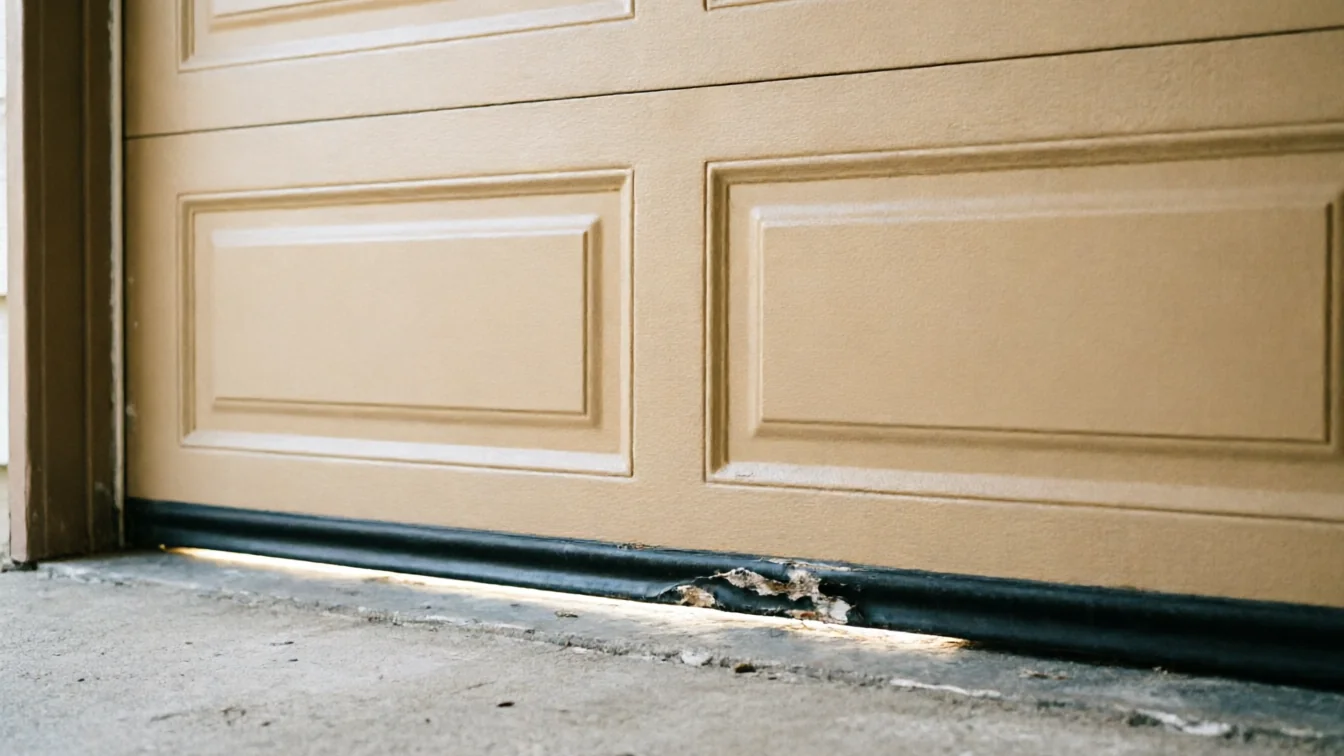
Most garage doors in this area went up somewhere between 1953 and 1992, with the bulk of the stock dating to the 1960s and 70s. That matters because the bottom astragal seal and side weather seals on a door that old were never built for a fifty-year service life. Vinyl degrades, the track channel that holds the seal widens or warps, and the seal stops sitting flush against the slab. You feel it as a cold-air line under the door on a breezy night, or you see daylight along the bottom edge when the door's shut.
On a lot of the older one-piece and early sectional doors still in service across this part of the county, the seal retainer itself is a thin aluminum track that was never designed to be replaced - it was meant to last the life of the door. When that track corrodes or the vinyl shrinks and pulls free of it, you're not patching a seal anymore, you're dealing with a retainer that has to come off the panel. That's a different job than snapping in a new strip, and it's the thing people call about thinking it's a quick fix.
What Local Conditions Do
This area sits in a mild temperate band, so you're not fighting frost-heave or ice damming the way a door in a cold-winter climate would. But mild and humid year-round isn't gentle on rubber and vinyl - constant moisture and sun exposure break down seal material faster than dry heat or cold ever would, and salt-laden coastal air speeds up corrosion on the aluminum retainer track and the hinges that hold the panel square against the seal. A door that's slightly out of square from decades of settling won't seal evenly even with brand-new weatherstripping, which is common on houses from the 1960s and 70s stock that makes up most of the neighborhoods here.
The draft isn't always a seal problem at all. Sometimes the slab itself has settled or cracked at the threshold, and no amount of new weatherstripping closes that gap. If your door seals fine on three sides but gaps badly on one corner, that's usually the panel or the track, not the seal.
What It Costs
We don't have a flat number we can quote you here without seeing the door - the cost swings a lot depending on whether you need a simple bottom seal swap, a full retainer track replacement, or a threshold repair on top of it. A straightforward bottom astragal replacement is the cheapest end of the job. Side and top seals cost more in labor than material because of the trim work involved on an older frame. If the panel's warped or the track's corroded through, you're looking at panel repair or replacement pricing instead, which is its own conversation.
One honest limitation: if your door is original to a house built in the early part of that 1953-1992 range, replacing the seal alone sometimes isn't worth it. The frame and panel have moved enough over the decades that a new seal won't hold a tight line for long. In that case we'll tell you straight rather than sell you a seal job that won't last.
Checking It Yourself
Close the door at night and walk the inside perimeter with a flashlight off. Any light line along the bottom or sides tells you where the seal's failing. Run your hand along the bottom seal - if it's hard, cracked, or flattened on one side, it's past its life. Check the corners first; those take the most flex over the years and fail before the center does.
If the gap is at the bottom corners only, check the slab for settling before you blame the seal - a seal can't fix a concrete problem. If it's a thin, even line all the way around, that's a seal that's simply shrunk with age and humidity, which is common on the older stock in this part of the county. Either way, a seal replacement is cheap enough to try first before assuming you need a new door.
Frequently asked questions
Why does my garage door let in a draft even though the seal looks fine?
On older doors built in the 1960s and 70s, the panel or track can be slightly out of square from decades of settling, so the seal doesn't sit flush even if it hasn't visibly worn out. Check the gap pattern - uneven gaps point to the frame, not the seal.
Will a new weather seal fix a cold draft in a garage this close to the coast?
Usually, if the seal itself is cracked or flattened. But salt air and constant humidity also corrode the aluminum retainer track that holds the seal, and a new strip won't hold if that track is failing underneath it.
Is it worth replacing the seal on a door from the 1960s or 70s?
Often yes, since it's the cheapest fix available. But if the panel's warped or the frame has shifted over the decades, a new seal will fail again quickly, and that's worth knowing before you pay for one.
How do I tell if the draft is the seal or the concrete slab?
Walk the door at night with the lights off and look for where light comes through. A gap only at one corner usually means the slab or threshold has settled. A thin, even gap all the way around usually means the seal itself has shrunk.
Related garage door services in Hallandale Beach
More garage door guides
Book garage door service in Hallandale Beach
Call now or request a quote - tell us what the door is doing and where you are.