Hallandale Beach, FL · Garage Door Service
Garage Door Roller Replacement in Hallandale Beach
Worn rollers on 1960s-70s Hallandale Beach garages wear differently than newer builds. Here's what causes it, what to look for, and how long the job takes.
- Repairs & new doors
- Springs & openers
- Serving 7 nearby communities
Can You Do This Yourself
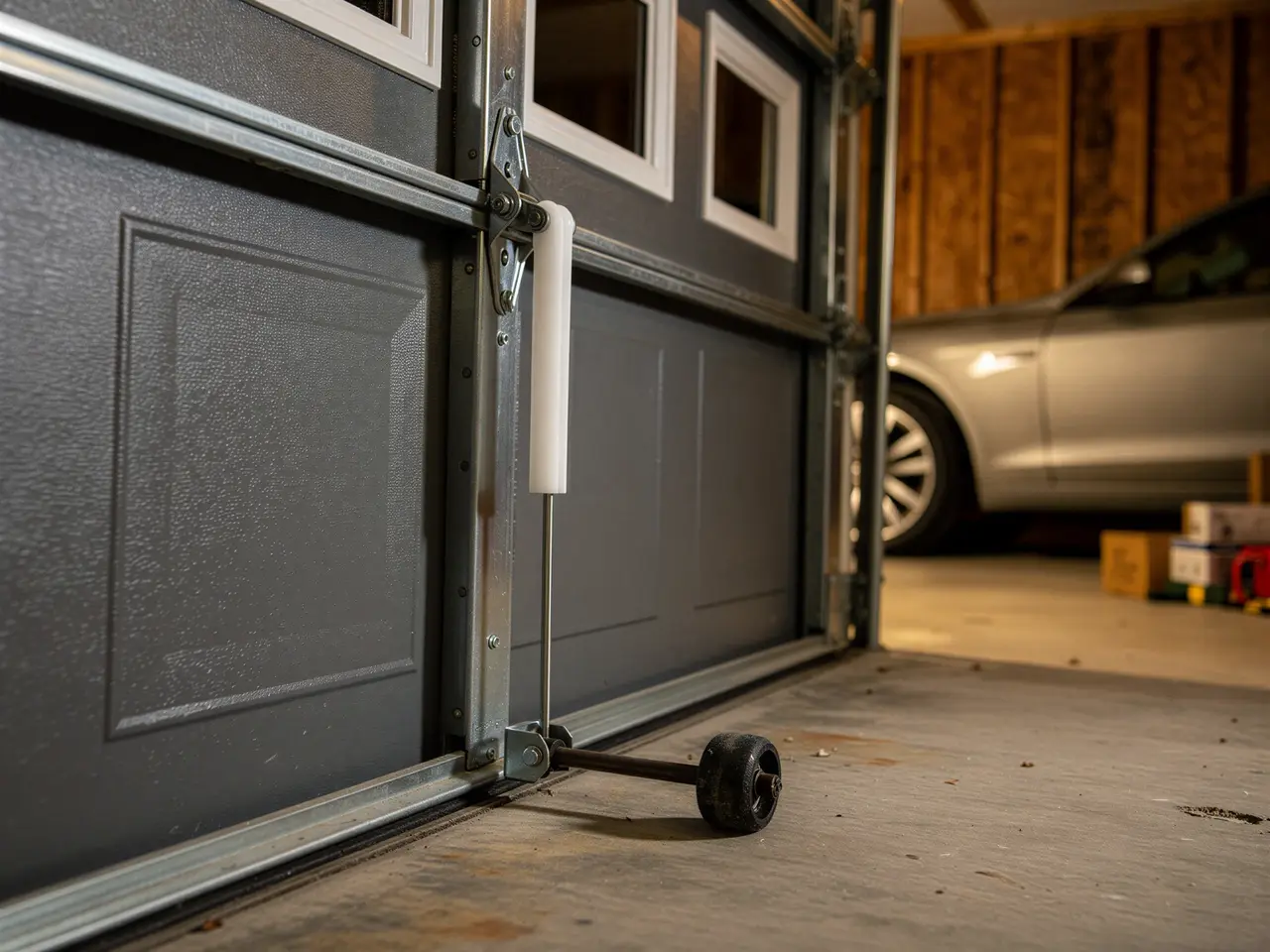
Swapping a single nylon roller on a door that still opens and closes fine is within reach for a handy homeowner. You pull the hinge pin, slide the old roller out of the track, and set a new one in. Where it gets risky is the bottom rollers near the cables and the ones closest to the spring side of the track - pull the wrong bracket loose on a door under tension and you can take a hit. If more than two or three rollers are worn, or if the door is sagging on one side, that's usually a sign the track itself has walked out of alignment, and that's not a one-roller fix anymore. Steel rollers with sealed bearings are a straightforward upgrade over the stock plastic ones that came with most doors here, and most owners can tell the difference in the first week - quieter, smoother travel, less shudder when the door starts and stops. If you're not sure whether what you're looking at is a roller problem or a track problem, that's the one call worth making before you buy parts. Mismatched roller stems are a common DIY mistake - doors from the 1960s-70s era often used a different stem length than what's sold off the shelf today.
What Causes It Around Here
Hallandale Beach sits in the mild temperate band, no deep freezes, no snow load, but that doesn't mean the rollers get an easy life. Most of the housing stock across the service area went up between 1953 and 1992, with a median build year around 1971, and the bulk of it is 1960s-70s construction. Garages from that era were built with steel tracks set closer to the frame opening than you'll see in anything built after 2000, which means less clearance and more friction on every cycle. Add in decades of salt-tinged humidity working on exposed steel hardware, and plastic rollers that were never rated for that kind of daily flex start cracking and flat-spotting well before a door on a newer build would show the same wear. It's not one dramatic failure - it's thousands of open-close cycles on a track geometry and a roller material that weren't built for 50 years of use. That combination, old track spacing plus coastal air plus age, is why roller wear shows up as a recurring call across the whole service area rather than a one-off.
What You Are Seeing
A grinding or popping sound as the door travels, especially right as it clears the bottom bracket, is almost always a roller going bad before it's a cable or spring problem. Look at the roller itself if you can see it - flat spots, visible cracks in the wheel, or a roller that's worn down to the metal stem are the giveaways. Doors that shudder or jump slightly partway through the cycle, rather than moving smooth top to bottom, are telling you one or two rollers have seized or gone out of round. If the door pulls noticeably to one side as it closes, check whether it's worse on the side with the older or more worn-looking rollers - that's usually not a balance issue, it's a roller dragging in the track. None of this is an emergency the way a snapped cable is. A worn roller will keep working, badly, for a while before it fails outright, which is exactly why it gets ignored until the noise gets loud enough to notice.
Time on the Job
A straight roller swap, same bracket positions, no track work needed, is a short job - most of the time on site goes to removing panels or brackets carefully rather than the swap itself. If the track has to come off and get reset because of the wear pattern, that adds real time, since the door has to be supported and the tension has to be managed safely while the track is loose. We don't carry every roller stem length on the truck for every house in the service area, since the 1960s-70s builds and the post-1990s builds often take different sizes - if yours is an odd stem length, that can mean a short wait on the part rather than a same-visit fix. Worth knowing going in.
Frequently asked questions
How many rollers does a garage door usually have?
Most residential doors have 10 to 12 rollers, two or three per panel depending on door height. You don't need to replace all of them if only a few are worn, but rollers on the same door tend to wear at a similar rate since they've gone through the same number of cycles.
Will a noisy door definitely need new rollers?
Not always - noise can also come from a dry track, loose hardware, or an opener chain needing tension. But a grinding or popping sound localized to where the roller meets the track, especially paired with visible wear on the roller, points to the roller rather than the opener or spring.
Are steel rollers worth it over plastic?
Sealed steel rollers run quieter and last longer than stock nylon ones, especially on older track geometry common across this service area. They cost more upfront. For a door that only gets opened a couple times a day, the stock nylon rollers may outlast the homeowner's patience either way.
By Neighborhood
Roller Replacement across the Hallandale Beach area
We also handle roller replacement in these Hallandale Beach-area suburbs.
Book garage door service in Hallandale Beach
Call now or request a quote - tell us what the door is doing and where you are.